// THE_BLOCK
Twelve weeks with a shape
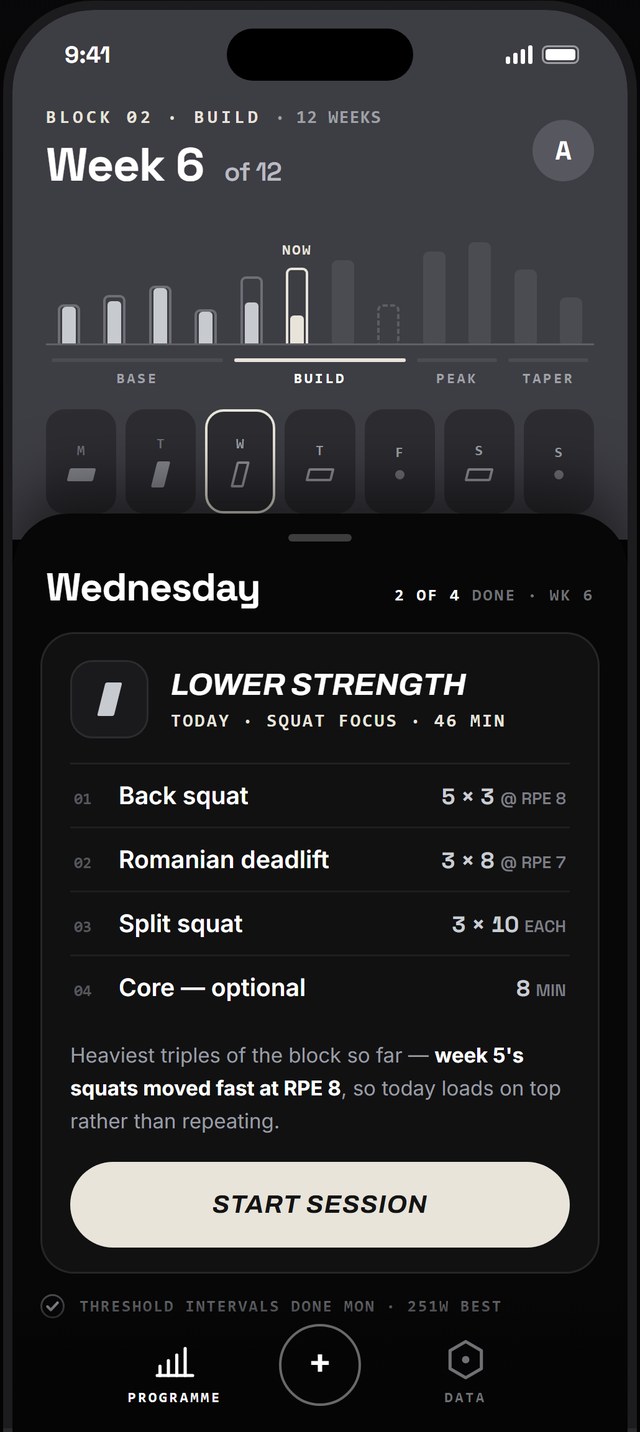
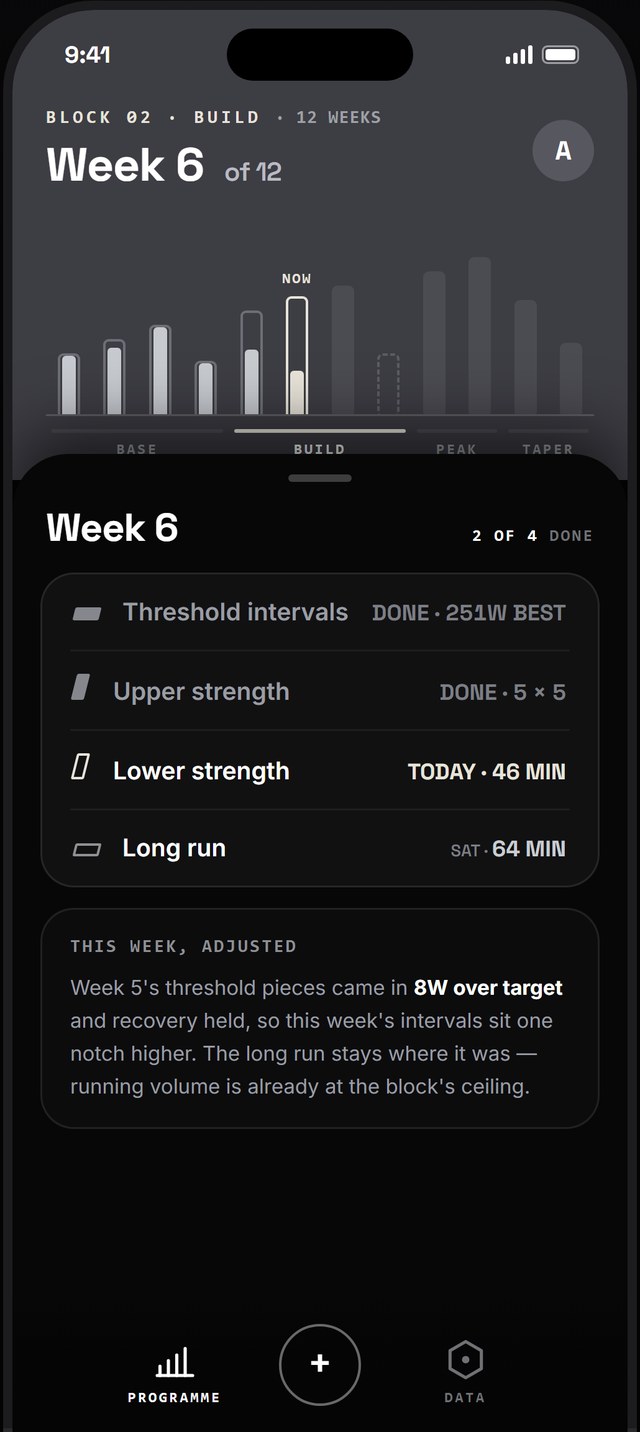
Base, build, peak, taper. Deloads are planned, not apologised for — and the arc shows what’s done against what’s ahead.
Koncur builds strength and endurance in the same twelve-week plan — and rewrites it from what you actually log.
// THE PRODUCT
A lifting app and a running app will happily wreck each other. Koncur plans both from one recovery budget, so the heavy triples and the threshold intervals land in the same week on purpose.
// THE_BLOCK
Base, build, peak, taper. Deloads are planned, not apologised for — and the arc shows what’s done against what’s ahead.
// THE_ENGINE
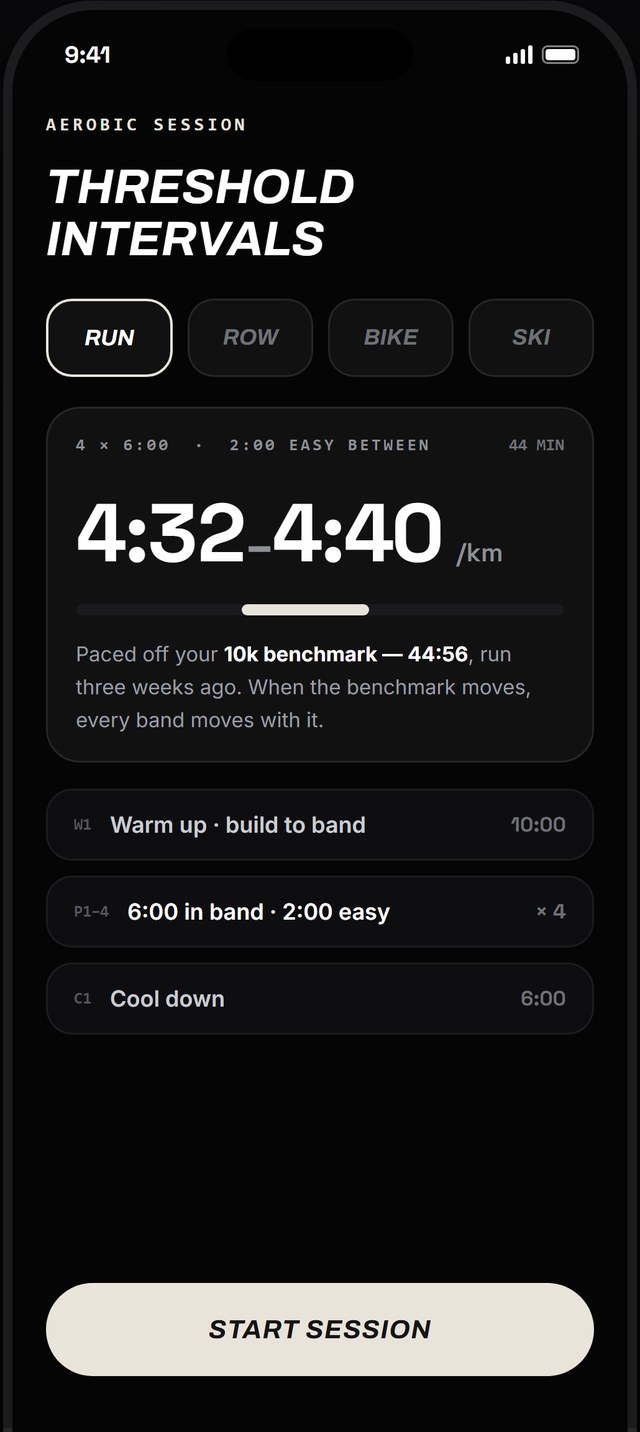
Pace bands and watt targets from your own numbers. Heart-rate straps, smart trainers pair straight in.
// THE_STANDING
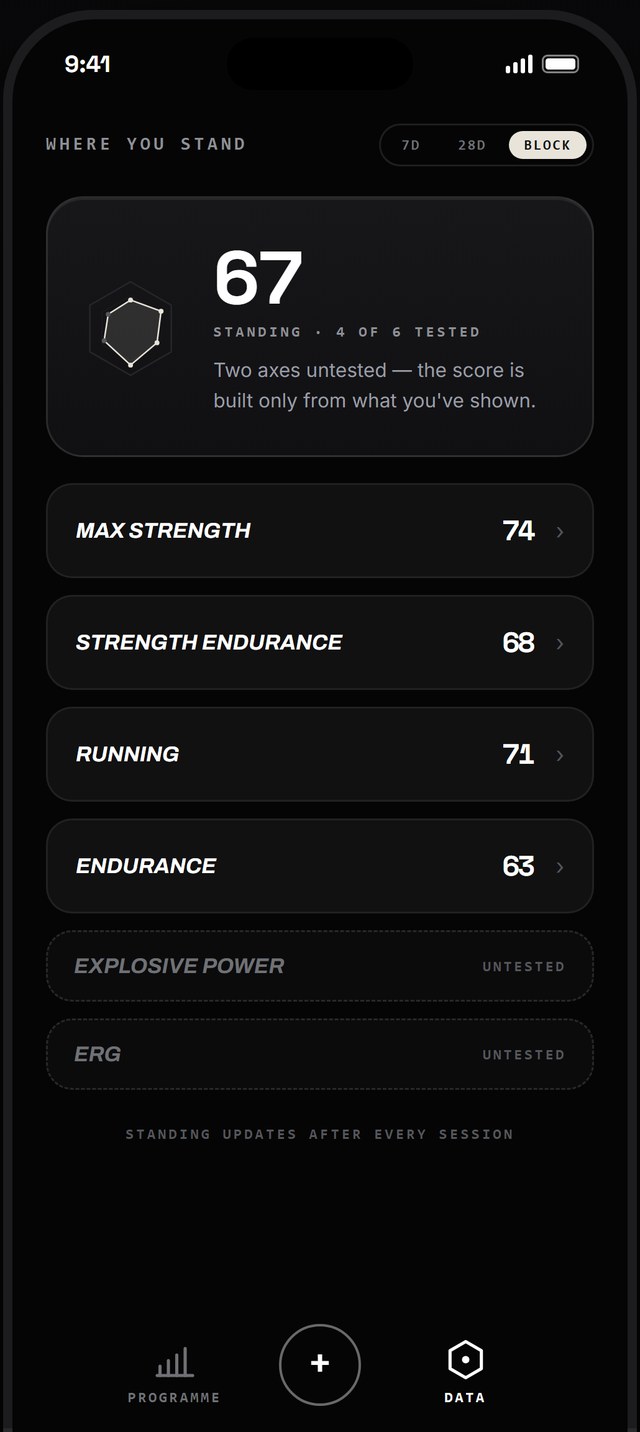
Strength, endurance and four more — measured from logged work only. What you haven’t tested stays dark. Nothing is guessed.
Every session has a reason, and the reason is written on it. Every formula behind the plan is published.
// HOW IT WORKS

STEP_01
Your current lifts, your current times, the days you actually have. No quiz theatre — the plan is only as good as the numbers underneath it.

STEP_02
Twelve weeks, periodised, strength and aerobic in one calendar. Racing? The block ends on race week, not two weeks after it.

STEP_03
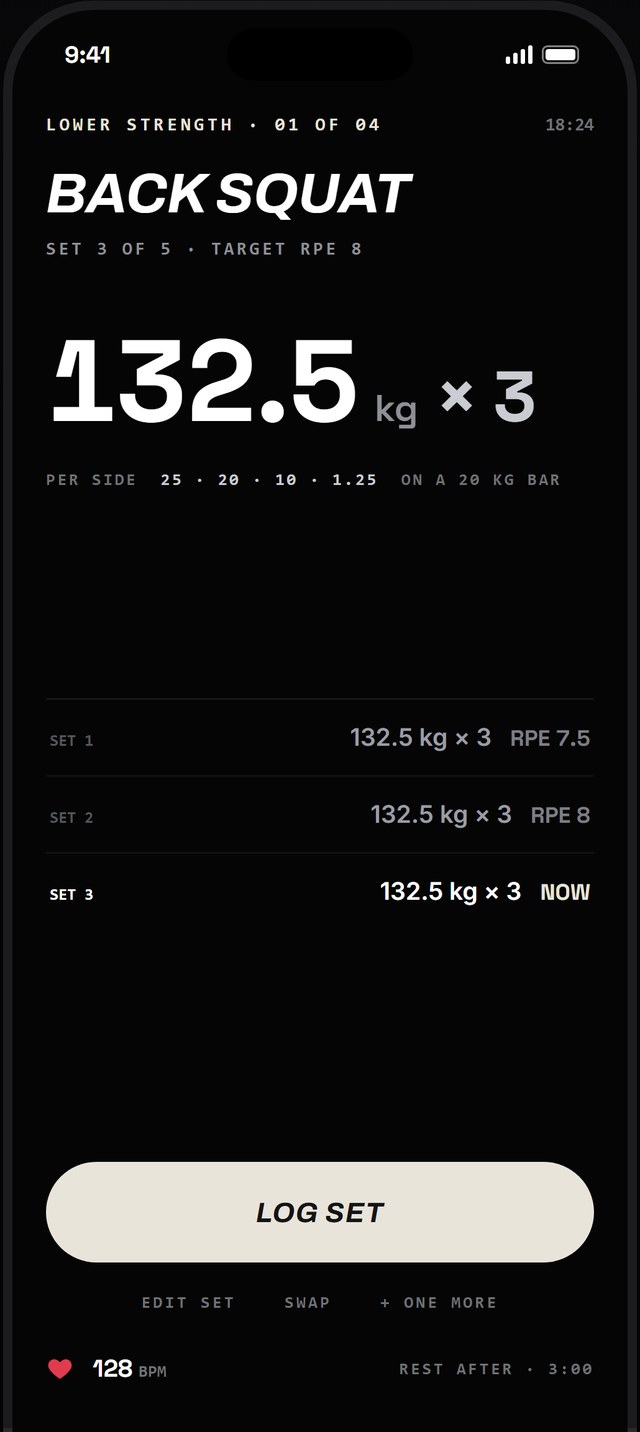
One tap a set. The plates are worked out for you, the last session’s numbers are already on screen, and PRs are caught as they happen.

STEP_04
Miss a week, or move faster than planned — next week is rebuilt from what actually happened, not what was supposed to.
// PRICING
Pricing at launch. Billed through the App Store.
// FAQ
Training software for hybrid athletes. It generates a twelve-week programme covering strength and endurance together, runs your sessions — sets, plates, pace bands, watt targets — and rebuilds the plan from what you log.
Anyone training both sides in the same week: Hyrox and CrossFit athletes, military and fire-service fitness, runners who lift, lifters who run.
Because neither knows the other exists. Two apps means two plans competing for the same legs and the same recovery. Koncur plans both from one budget, so hard days stack where they should and easy days actually stay easy.
No. Everything works logged by hand. If you have them, heart-rate straps, smart trainers pair in and the targets get sharper.
£14.99 a month or £119 a year. Week one of your programme and all your own logging are free. One tier — everything included.
Koncur is iOS-first and in the final stage of App Store review. Join the early-access list and your invite goes out the moment it’s live.